
Have you ever searched for synonyms of happy after writing an email, school essay, social media post, or text message? Using the word happy over and over can make your writing sound repetitive, even when your message is sincere and meaningful.
Learning the synonyms of happy helps you express your feelings more accurately. Some words describe quiet contentment, while others show excitement, pride, relief, or pure joy. Choosing the right word makes your writing clearer, more engaging, and easier to understand.
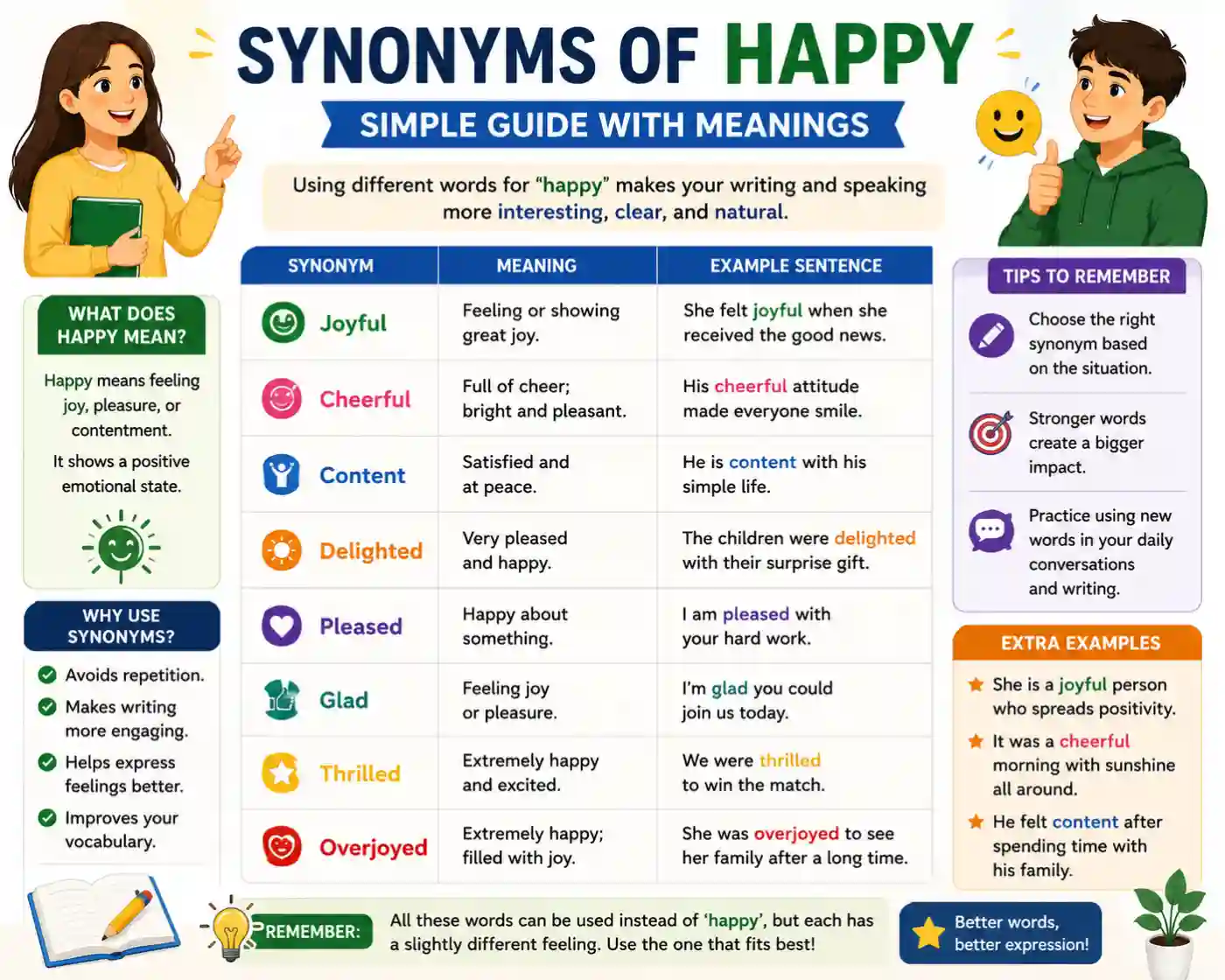
The best synonyms of happy include glad, joyful, cheerful, delighted, pleased, content, thrilled, and overjoyed. Each word has a similar meaning, but it works best in different situations, emotions, and levels of intensity.
What Does Happy Mean?
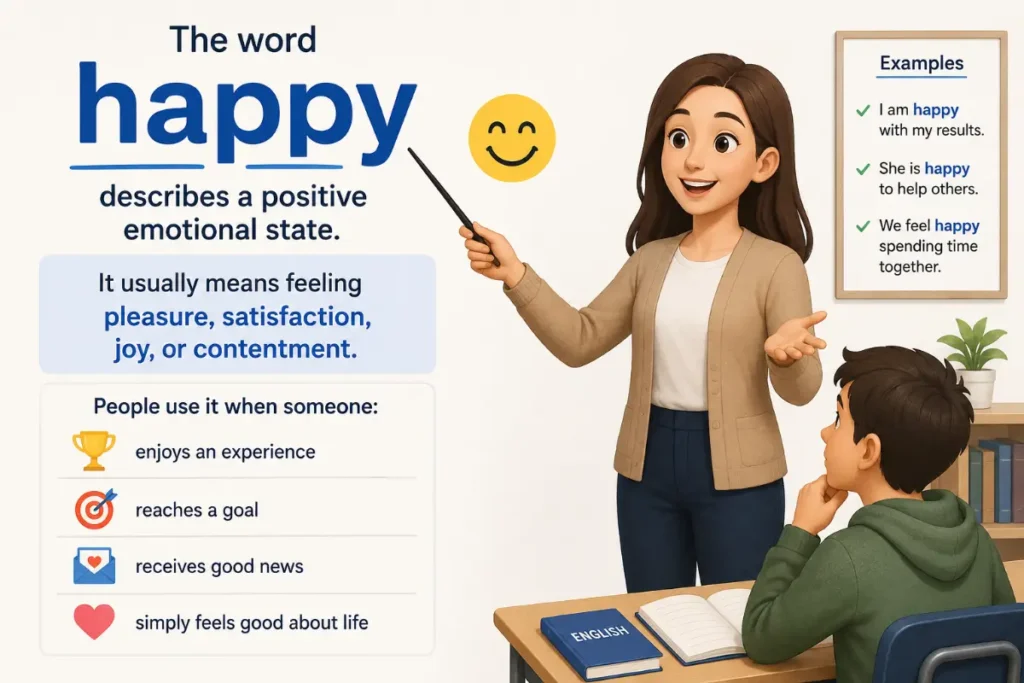
The word happy describes a positive emotional state. It usually means feeling pleasure, satisfaction, joy, or contentment. People use it when someone enjoys an experience, reaches a goal, receives good news, or simply feels good about life. Unlike many emotional words, happy is flexible. It works in casual conversations, school writing, business emails, speeches, and everyday communication.
For example:
- I was happy to see my old friend again.
- She’s happy with her new job.
- They looked happy after hearing the news.
- We’re happy to help you today.
Although these examples all use the same word, each situation expresses a slightly different feeling. That’s why choosing the right synonym often creates a clearer picture for the reader.
Where Does the Word Happy Come From?
Many people use the word every day without thinking about its history. The English word happy comes from the Middle English word hap, which meant luck, chance, or good fortune. The root hap also appears in words such as perhaps, happen, mishap, and haphazard. Centuries ago, a person was considered happy because good luck had come their way. Over time, the meaning shifted. Instead of focusing on luck alone, happy began to describe the pleasant feelings people experience after something good happens. Today, the word mainly refers to emotional well-being instead of good fortune.
This change explains why the word can describe many different emotions, including:
- Satisfaction.
- Joy.
- Gratitude.
- Relief.
- Excitement.
- Peacefulness.
- Optimism.
Understanding this history also explains why some synonyms fit certain situations better than others. A person who feels content isn’t experiencing the same emotion as someone who feels thrilled, even though both could be described as happy.
What Are the Best Synonyms of Happy?
| Word | Short Meaning | Tone | Example |
|---|---|---|---|
| Glad | Pleased | Everyday | I’m glad you arrived safely. |
| Joyful | Full of joy | Warm | The children were joyful during the celebration. |
| Cheerful | Bright and positive | Everyday | She stayed cheerful despite the rain. |
| Delighted | Extremely pleased | Formal | We were delighted by your invitation. |
| Pleased | Satisfied or glad | Neutral | I’m pleased with the results. |
| Content | Peacefully satisfied | Calm | He felt content after dinner. |
| Thrilled | Very excited | Strong | She was thrilled to win the prize. |
| Overjoyed | Filled with great joy | Strong | They were overjoyed by the baby’s arrival. |
| Ecstatic | Extremely happy | Very Strong | Fans were ecstatic after the victory. |
| Blissful | Perfectly happy | Descriptive | They enjoyed a blissful vacation. |
This wider vocabulary allows you to describe emotions with much greater accuracy instead of using the same word repeatedly.
Simple Everyday Synonyms of Happy
These words work well in normal conversations, school assignments, emails, and daily writing.
- Glad.
- Pleased.
- Cheerful.
- Content.
- Excited.
- Relieved.
- Thankful.
- Grateful.
- Upbeat.
- Lighthearted.
These choices sound natural and fit most situations.
Example
- I’m glad you called.
- She feels content with her decision.
- We were excited about the concert.
- They stayed cheerful during the trip.
- Everyone felt relieved after hearing the good news.
Formal Synonyms of Happy
Professional writing often calls for words that sound polished without becoming overly dramatic.
Some excellent formal alternatives include:
- Delighted.
- Elated.
- Jubilant.
- Pleased.
- Satisfied.
- Buoyant.
- Joyful.
- Radiant.
- Blissful.
- Euphoric.
These words frequently appear in:
- Business emails.
- Company announcements.
- Academic writing.
- News articles.
- Speeches.
- Professional presentations.
Example
- We are delighted to welcome you to our team.
- The organization was pleased with the final outcome.
- Investors remained buoyant throughout the quarter.
- Graduates looked radiant during the ceremony.
- The committee expressed its satisfaction with the proposal.
Informal and Slang Synonyms of Happy
Friends rarely say I am delighted in casual conversation. Instead, people often choose relaxed expressions.
Popular informal alternatives include:
- Chipper.
- Pumped.
- Psyched.
- Stoked.
- On cloud nine.
- Over the moon.
- Tickled.
- Feeling great.
- Feeling awesome.
- In a good mood.
These expressions sound natural in conversations, texts, and social media posts.
Example
- I’m so pumped for the weekend.
- She’s over the moon about her new puppy.
- We’re feeling awesome today.
- He’s been in a good mood all week.
- Everyone was stoked after the game.
Remember that slang changes over time, so these expressions fit casual settings much better than formal writing.
Synonyms of Happy by Intensity
Not every kind of happiness feels the same. Sometimes you’re simply satisfied. Other times you’re celebrating the best day of your life.
Choosing a synonym based on emotional strength helps readers understand exactly how someone feels.
| Intensity | Synonyms | Typical Situation |
|---|---|---|
| Very Mild | Content, Fine, Satisfied | Quiet everyday happiness |
| Mild | Glad, Pleased, Cheerful | Good news or pleasant moments |
| Moderate | Joyful, Thankful, Grateful, Upbeat | Positive experiences and appreciation |
| Strong | Delighted, Thrilled, Elated, Radiant | Achievements and exciting events |
| Very Strong | Ecstatic, Euphoric, Overjoyed, Jubilant | Life changing celebrations or unforgettable moments |
Think of happiness as a scale rather than a single emotion. Someone who receives a compliment may feel pleased. Someone who wins a world championship may feel ecstatic. Choosing the right level makes your writing more vivid and believable.
Which Synonym Should You Choose?
Many learners search for synonyms of happy because they want a stronger word. However, stronger isn’t always better. A simple word like glad often sounds more natural than ecstatic if the situation isn’t dramatic. Ask yourself these questions before choosing a synonym.
- How strong is the emotion?
- Is the situation formal or casual?
- Am I speaking or writing?
- Who is my audience?
- Does this word match the feeling I want readers to imagine?
Answering these questions makes it much easier to choose the perfect word instead of picking the longest or most impressive one. In the next section, you’ll learn how these synonyms work by part of speech, the differences between American and British English, the best word for resumes, essays, emails, texting, and speaking, along with dozens of original real-life examples that show each synonym in action.
Can Happy Be Different Parts of Speech?
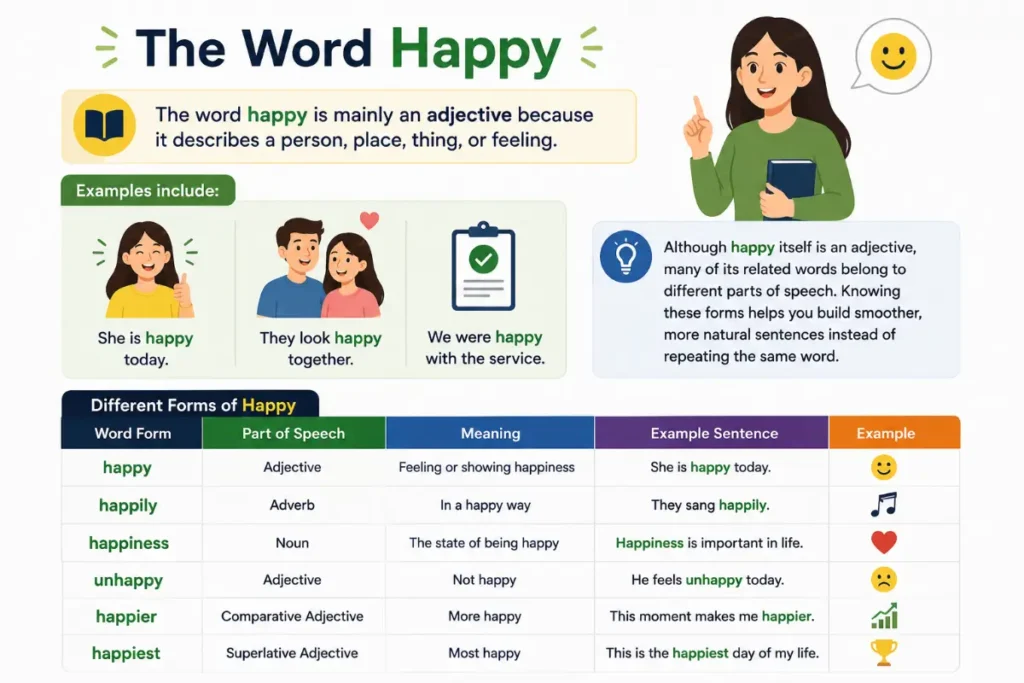
The word happy is mainly an adjective because it describes a person, place, thing, or feeling.
Examples include:
- She is happy today.
- They look happy together.
- We were happy with the service.
Although happy itself is an adjective, many of its related words belong to different parts of speech. Knowing these forms helps you build smoother, more natural sentences instead of repeating the same word.
Adjective Synonyms
These words replace happy directly before or after a noun.
| Word | Example |
|---|---|
| Glad | I’m glad you came. |
| Cheerful | She stayed cheerful all day. |
| Joyful | The family looked joyful. |
| Delighted | We’re delighted to help. |
| Content | He felt content with his choice. |
| Thrilled | They were thrilled about the news. |
| Elated | She felt elated after graduation. |
| Ecstatic | Fans were ecstatic after the win. |
| Upbeat | His upbeat attitude impressed everyone. |
| Radiant | The bride looked radiant. |
Noun Forms Related to Happy
Sometimes you need a noun instead of an adjective.
| Noun | Meaning | Example |
|---|---|---|
| Happiness | The feeling of being happy | Happiness comes from spending time with loved ones. |
| Joy | Great happiness | The news filled everyone with joy. |
| Delight | Great pleasure | The children screamed with delight. |
| Pleasure | Enjoyment or satisfaction | It was a pleasure meeting you. |
| Contentment | Peaceful satisfaction | She found contentment in a quiet life. |
| Cheerfulness | A positive attitude | His cheerfulness lifted the team’s spirits. |
Verb Forms Related to Happy
English often uses verbs instead of emotional adjectives.
| Verb | Example |
|---|---|
| Celebrate | They celebrated their success. |
| Smile | She smiled after hearing the compliment. |
| Rejoice | Fans rejoiced after the victory. |
| Enjoy | We enjoyed the vacation. |
| Appreciate | I appreciate your support. |
Using different parts of speech makes your writing flow naturally while reducing repetition.
Are There US and UK Differences?
Most synonyms of happy have the same meaning in American and British English. Still, a few words appear more often in one region than another.
| Word | US Usage | UK Usage | Notes |
|---|---|---|---|
| Glad | Very common | Very common | Safe everywhere. |
| Happy | Very common | Very common | Universal choice. |
| Chuffed | Rare | Very common | Means very pleased in British English. |
| Cheerful | Common | Common | Used naturally in both countries. |
| Delighted | Common | Very common | Slightly more frequent in British English. |
| Thrilled | Very common | Common | Popular in American English. |
| Over the moon | Common | Very common | Widely understood in both regions. |
| Tickled | Common | Less common | Often heard in American English. |
If you’re writing for an international audience, choose familiar words like glad, pleased, cheerful, joyful, or delighted. They sound natural almost everywhere.
What’s the Best Word for a Resume?
Resumes should sound professional, confident, and sincere. Avoid emotional or exaggerated words.
Good choices include:
- Pleased.
- Delighted.
- Enthusiastic.
- Motivated.
- Passionate.
- Excited.
- Grateful.
Resume Examples
- I am excited to contribute my experience to your company.
- I would be delighted to join your growing team.
- I am grateful for the opportunity to apply.
- I remain enthusiastic about helping customers succeed.
- I am passionate about delivering high quality work.
Avoid words like ecstatic, overjoyed, or pumped because they sound too informal for professional documents.
What’s the Best Word for an Essay?
School essays usually require a balanced, descriptive style. The best synonym depends on the topic and tone.
Useful choices include:
- Joyful.
- Content.
- Cheerful.
- Delighted.
- Grateful.
- Optimistic.
- Satisfied.
Essay Examples
- The villagers remained cheerful despite difficult conditions.
- She felt grateful for her teacher’s guidance.
- The family lived a content life in the countryside.
- The children became joyful during the celebration.
- The scientist was delighted with the successful experiment.
These words sound natural without making academic writing feel dramatic.
What’s the Best Word for Text Messages?
Texting is relaxed, so natural language works best.
Popular choices include:
- Glad.
- Pumped.
- Psyched.
- Stoked.
- Happy.
- Excited.
- Over the moon.
- Awesome.
Text Message Examples
- I’m so glad you made it.
- I’m pumped for tomorrow.
- That’s awesome news.
- I’m over the moon for you.
- I’m so excited to see everyone.
These expressions sound friendly and conversational.
What’s the Best Word for Emails?
Emails can be formal or casual depending on the situation.
Professional Emails
Good choices include:
- Delighted.
- Pleased.
- Grateful.
- Thankful.
- Happy.
Examples:
- We are pleased to confirm your appointment.
- I’m delighted to work with your team.
- Thank you. We’re grateful for your continued support.
- I’m happy to answer your questions.
- We’re pleased to announce the launch of our new service.
Friendly Emails
More relaxed alternatives include:
- Glad.
- Excited.
- Happy.
- Cheerful.
- Looking forward to.
Examples:
- I’m glad you reached out.
- I’m excited about our weekend trip.
- Happy to hear from you again.
- I’m looking forward to seeing everyone.
- It was great catching up with you.
What’s the Best Word in Everyday Speaking?
Conversation usually sounds best with simple words.
Instead of trying to impress people with unusual vocabulary, choose words that match the situation naturally.
Excellent everyday choices include:
- Happy.
- Glad.
- Excited.
- Content.
- Cheerful.
- Relieved.
- Thankful.
- Great.
Spoken Examples
- I’m glad everything worked out.
- We’re really happy for you.
- I’m relieved it’s finally over.
- She’s excited about starting college.
- I’m thankful for all your help.
These words feel genuine and easy to understand.
Real Life Examples Using Different Synonyms
Seeing words in context makes them easier to remember.
School
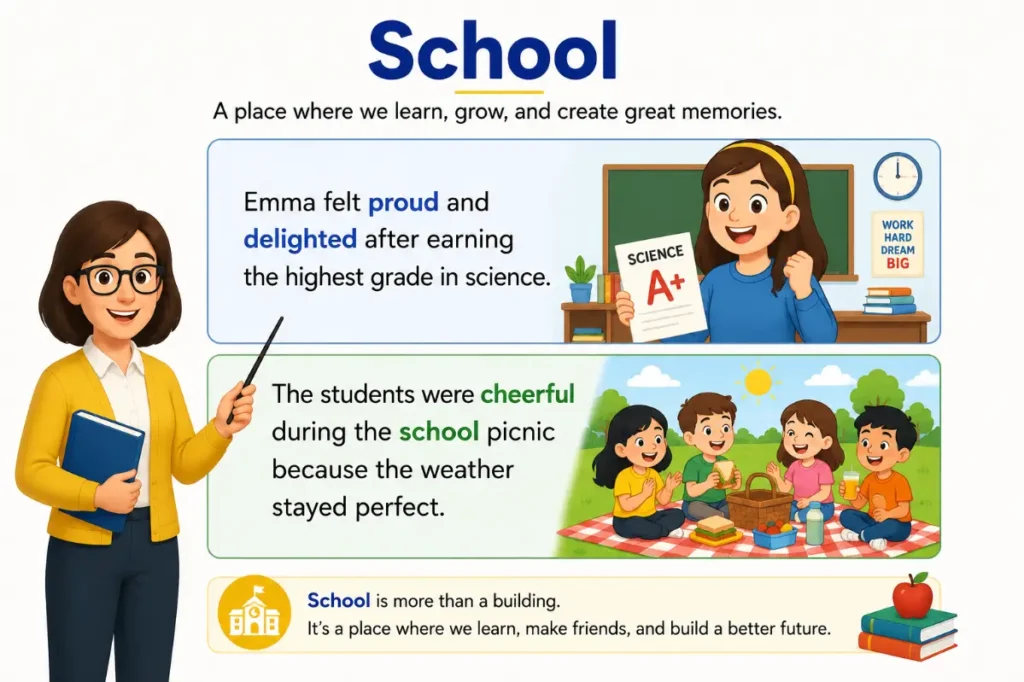
- Emma felt proud and delighted after earning the highest grade in science.
- The students were cheerful during the school picnic because the weather stayed perfect.
Work
- Our manager was pleased with the team’s presentation.
- Everyone felt relieved after completing the project before the deadline.
Family
- Grandma looked radiant when the whole family surprised her on her birthday.
- The children were overjoyed after opening their holiday gifts.
Friends
- Jake was thrilled when his best friend announced the wedding.
- We were glad everyone arrived safely despite the storm.
Sports
- The players became ecstatic after winning the championship.
- The coach looked satisfied with the team’s performance.
Travel
- We felt content sitting quietly beside the lake at sunset.
- Everyone remained upbeat even after our flight was delayed.
Daily Life
- Mom was thankful for everyone’s help cleaning the house.
- The puppy looked joyful while running through the park.
- I felt lighthearted after finishing all my homework.
These examples show that every synonym creates a slightly different picture, even though they all relate to happiness.
Glad vs Happy What’s the Difference?
These two words are close in meaning, but they aren’t always interchangeable.
| Glad | Happy |
|---|---|
| Usually connected to a specific reason | Can describe a general emotional state |
| Often temporary | Can be temporary or long lasting |
| Common in conversation | Common everywhere |
| Usually follows good news | Describes overall feelings too |
Examples:
- I’m glad you called.
- I’m happy with my new apartment.
The first sentence refers to one event.
The second describes an ongoing feeling.
Joyful vs Cheerful What’s the Difference?
These words both express positive emotions, but they create different images.
| Joyful | Cheerful |
|---|---|
| Deep happiness | Bright positive attitude |
| Stronger emotion | Lighter emotion |
| Often linked to meaningful moments | Fits everyday situations |
| Sometimes emotional | Usually describes personality |
Examples:
- The family felt joyful after welcoming a new baby.
- Our teacher stayed cheerful throughout the school year.
A joyful person experiences deep happiness.
A cheerful person regularly shows optimism and friendliness.
Delighted vs Thrilled What’s the Difference?
These two words often appear together, but they don’t express exactly the same feeling.
| Delighted | Thrilled |
|---|---|
| Very pleased | Extremely excited |
| Professional and polite | More energetic |
| Common in emails | Common in conversations |
| Suitable for formal writing | Better for exciting news |
Examples:
- We’re delighted to announce your promotion.
- She was thrilled to meet her favorite singer.
The first sounds polished.
The second emphasizes excitement.
Content vs Happy What’s the Difference?
Many English learners confuse these two words.
| Content | Happy |
|---|---|
| Peaceful satisfaction | General positive feeling |
| Calm emotion | Can range from calm to excited |
| Often long lasting | Covers many emotional levels |
| Quiet enjoyment | More flexible |
Examples:
- He felt content living in a small town.
- She was happy about getting a new job.
Someone who is content doesn’t need excitement to feel good. They’re simply satisfied with life.
In the final part, you’ll learn the most common mistakes people make when choosing happy synonyms, words that mean the opposite of happy, practical tips for selecting the perfect synonym, a concise conclusion, and answers to the most frequently searched questions about synonyms of happy, along with an SEO-optimized meta description.
What Are the Common Mistakes When Using Happy Synonyms?
Many words seem interchangeable with happy, but they often carry different meanings. Using the wrong one can make a sentence sound awkward or confusing.
Here are some common mistakes and how to avoid them.
1. Using a Strong Word for a Small Emotion
Words like ecstatic, euphoric, and overjoyed describe extremely intense happiness. They don’t fit ordinary situations.
Incorrect:
- I was ecstatic because I found my favorite pen.
Better:
- I was glad because I found my favorite pen.
2. Using Informal Slang in Formal Writing
Expressions like stoked, pumped, and psyched sound natural in conversations but not in business emails, reports, or academic papers.
Incorrect:
- We are pumped to announce our quarterly results.
Better:
- We are pleased to announce our quarterly results.
3. Confusing Happy With Excited
Being excited usually means looking forward to something. Being happy means feeling pleased or satisfied.
Compare these examples.
- I’m excited about tomorrow’s concert.
- I’m happy with the concert tickets I bought.
The first looks ahead.
The second describes satisfaction.
4. Mixing Up Happy and Content
Someone who is content feels peaceful and satisfied. Someone who is happy may feel calm, excited, grateful, proud, or joyful. These words overlap, but they don’t always describe the same emotion.
5. Overusing One Synonym
Repeating the same word can make writing feel repetitive.
Instead of writing:
- She was happy.
- Everyone was happy.
- We were happy.
- They looked happy.
Try adding variety.
- She was delighted.
- Everyone looked cheerful.
- We felt grateful.
- They seemed joyful.
Small changes make writing more engaging.
What Are the Opposite Words of Happy?
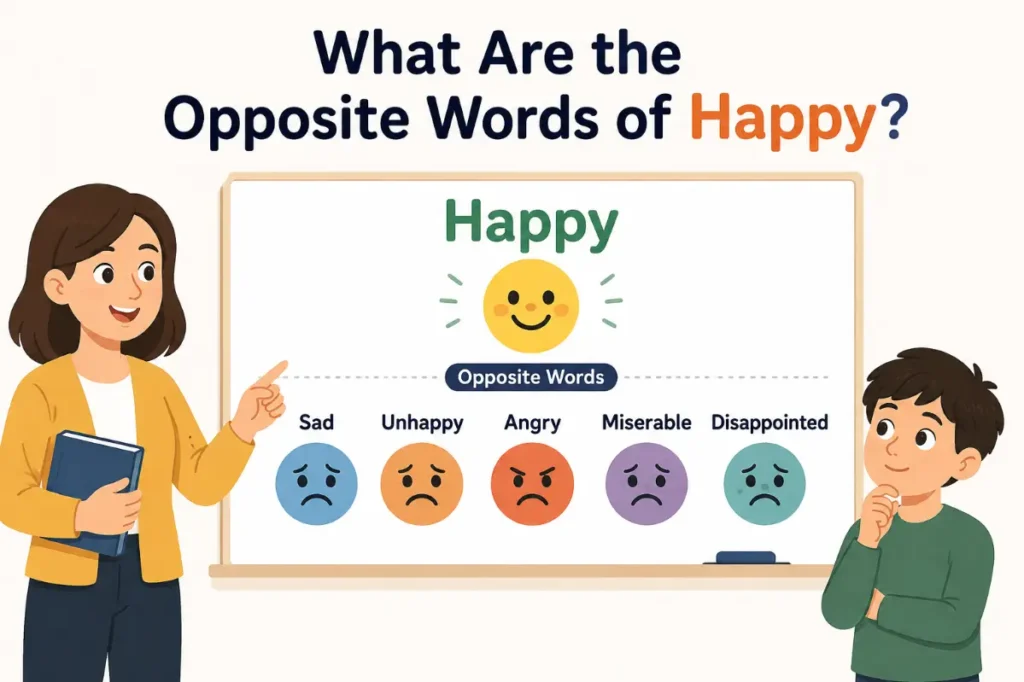
Sometimes the best way to understand a word is to compare it with its opposite. Here are common antonyms.
| Antonym | Meaning | Example |
|---|---|---|
| Sad | Feeling unhappy | She felt sad after moving away. |
| Unhappy | Not happy | He looked unhappy with the decision. |
| Miserable | Extremely unhappy | They were miserable during the storm. |
| Depressed | Feeling deeply unhappy | He appeared depressed after the loss. |
| Gloomy | Feeling down | The rainy weather made everyone gloomy. |
| Disappointed | Expectations were not met | We were disappointed by the result. |
| Upset | Emotionally disturbed | She was upset about the mistake. |
| Heartbroken | Deep emotional pain | He was heartbroken after the breakup. |
| Discouraged | Losing confidence | The repeated failures left her discouraged. |
| Dejected | Feeling low after disappointment | The team looked dejected after the match. |
Choosing the correct opposite word is just as important as choosing the right synonym because each one describes a different kind of negative emotion.
How Do You Choose the Right Synonym?
The easiest way to choose among the many synonyms of happy is to think about the situation before picking a word.
Use these simple tips.
- Match the strength of the emotion.
A small success calls for glad or pleased.
A life changing event may call for thrilled, ecstatic, or overjoyed.
- Think about your audience.
Professional readers expect words like pleased, delighted, or grateful.
Friends usually prefer happy, glad, or excited.
- Consider the purpose.
Academic writing often sounds better with content, joyful, or optimistic.
Casual conversations work well with simpler vocabulary.
- Don’t replace words just to sound smarter.
The best writing sounds natural.
Readers notice clear communication more than difficult vocabulary.
- Read your sentence aloud.
If the synonym sounds forced, choose a simpler option.
Natural writing almost always wins.
Quick Reference Table
| Situation | Best Choices |
|---|---|
| Everyday conversation | Happy, Glad, Cheerful |
| Professional email | Pleased, Delighted, Grateful |
| Resume | Enthusiastic, Excited, Passionate |
| Essay | Joyful, Content, Optimistic |
| Speech | Delighted, Joyful, Inspired |
| Text message | Glad, Pumped, Stoked, Excited |
| Major achievement | Thrilled, Elated, Ecstatic |
| Peaceful moment | Content, Blissful, Satisfied |
Keeping this table in mind makes it much easier to pick the right word without second guessing yourself.
Conclusion
Learning the synonyms of happy is about more than expanding your vocabulary. It’s about choosing words that match the exact feeling you want to express. A simple word like glad works perfectly for everyday conversations, while delighted, thrilled, content, or ecstatic can paint a much clearer picture in the right situation.
Instead of relying on the same word every time, think about the emotion, the audience, and the purpose of your writing. With practice, selecting the right synonym becomes second nature. The more variety you use naturally, the more engaging, accurate, and enjoyable your writing will become for every reader.
Frequently Asked Questions
What’s another way to say happy?
Some of the best alternatives include glad, joyful, cheerful, pleased, delighted, content, thrilled, and overjoyed. The right choice depends on how strong the emotion is and where you’re using it.
What are the best synonyms of happy for writing?
The best synonyms of happy for writing include cheerful, pleased, joyful, content, delighted, grateful, and thrilled. These words add variety while keeping your writing natural and clear.
Is joyful stronger than happy?
Yes. Joyful usually expresses a deeper and more meaningful emotion than happy. People often use it for celebrations, family moments, and important life events.
Can I use ecstatic instead of happy?
Only when the emotion is extremely strong. Ecstatic describes overwhelming happiness, so it sounds exaggerated for everyday situations.
Which synonym sounds most professional?
Pleased, delighted, and grateful are excellent professional choices. They sound polite, confident, and appropriate in business communication.
What’s the difference between happy and glad?
Glad usually refers to one specific reason for feeling good, while happy can describe both temporary feelings and a person’s overall emotional state.
Which synonym should students use in essays?
Students should choose words like joyful, content, cheerful, grateful, and optimistic because they sound natural, precise, and suitable for academic writing.
