
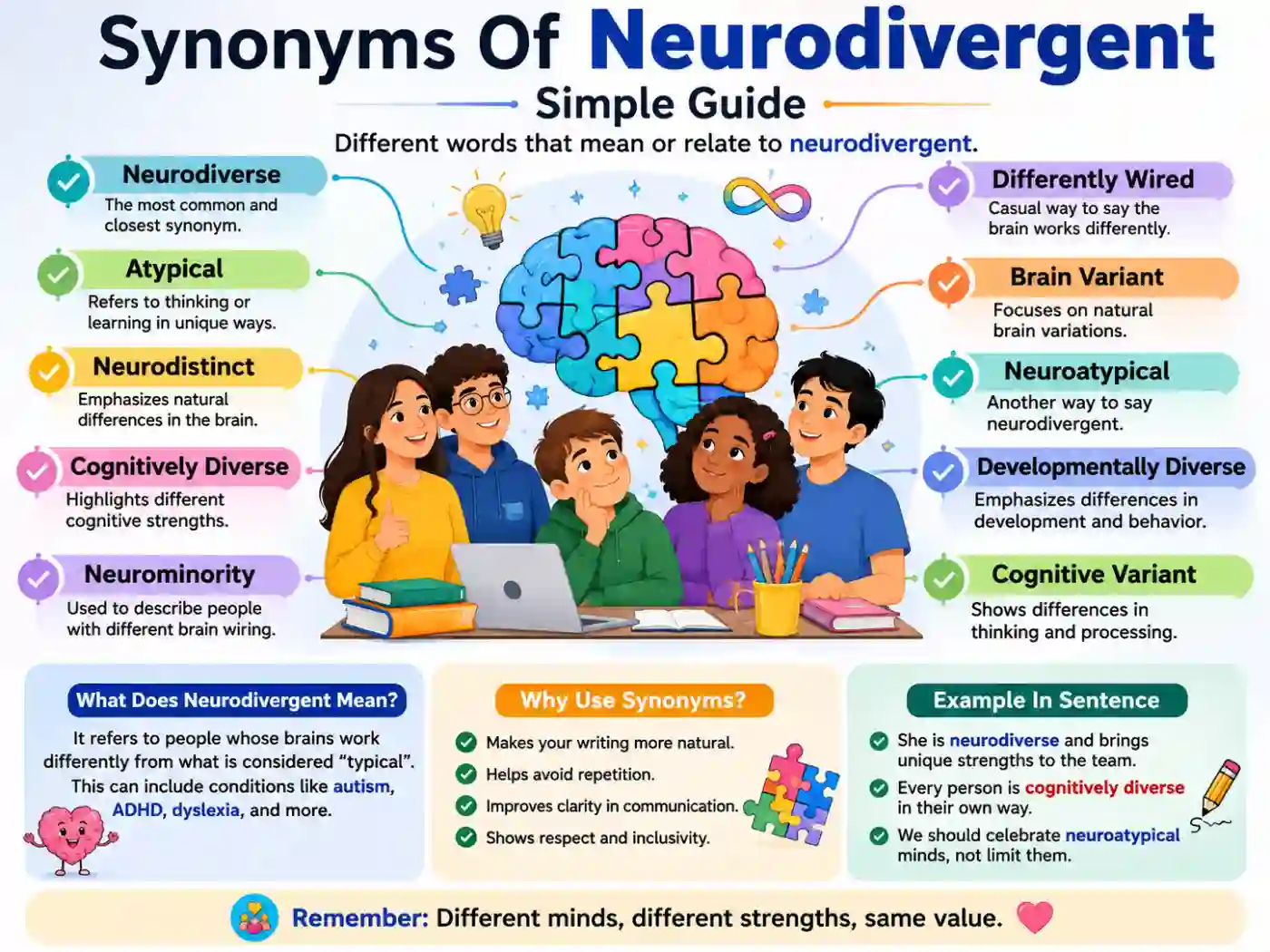
Have you ever written an email, essay, workplace message, or social media post and searched for synonyms of neurodivergent because you didn’t want to repeat the same word over and over? You’re not alone. As the term becomes more common, many writers look for alternative words that keep their writing clear without changing the intended meaning.
Finding the right alternative isn’t always easy. Unlike many English words, neurodivergent has very few true synonyms. Some related terms describe specific conditions, while others have different meanings or may sound outdated or disrespectful depending on the context.
Synonyms of neurodivergent are words or phrases used to describe people whose brains work differently from what society considers typical. Some alternatives are respectful and appropriate in everyday writing, while others should only be used in medical, educational, or historical contexts because they don’t mean exactly the same thing.
What Does Neurodivergent Mean
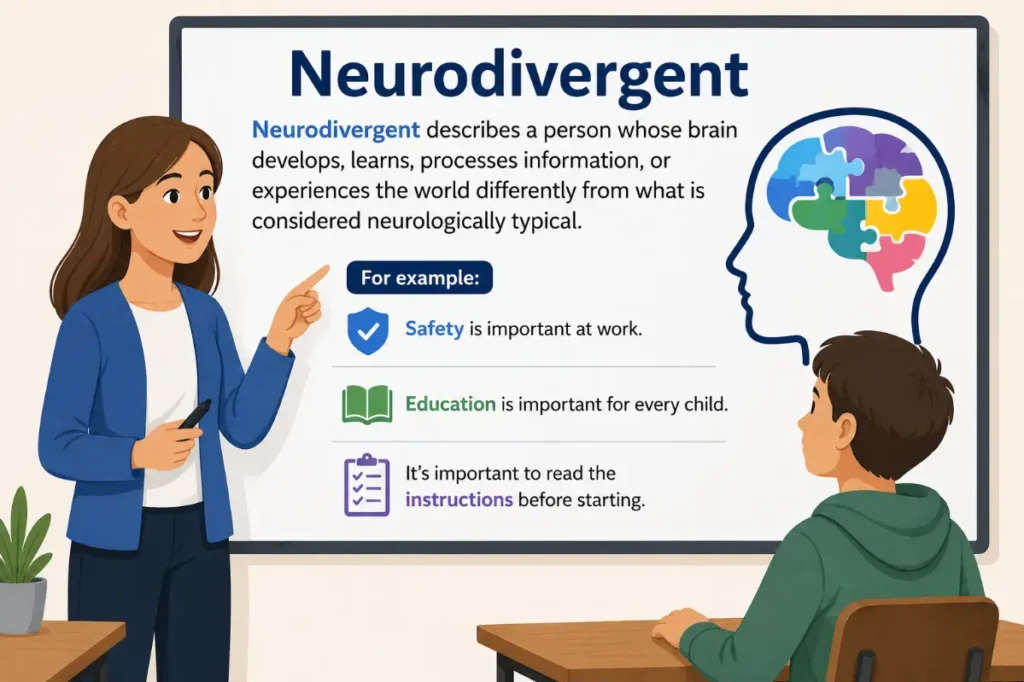
Neurodivergent describes a person whose brain develops, learns, processes information, or experiences the world differently from what is considered neurologically typical. The word does not describe a disease or something that needs to be fixed. Instead, it recognizes that human brains naturally work in different ways.
People who may identify as neurodivergent include those with:
- Autism.
- ADHD.
- Dyslexia.
- Dyspraxia.
- Dyscalculia.
- Tourette syndrome.
- Some learning differences.
- Certain other neurological conditions.
The term focuses on difference rather than deficiency, which is one reason it has become widely accepted in education, healthcare, workplaces, and disability advocacy.
Word Origin And Plain English Meaning
Many articles explain what the word means but skip where it came from. Knowing its history makes it easier to understand why the term is preferred today.
The word neurodivergent comes from two parts.
| Word Part | Meaning |
|---|---|
| Neuro | Relating to the brain or nervous system. |
| Divergent | Different from the usual path or standard. |
Together, neurodivergent literally means having a brain that works differently from what is considered typical.
The idea comes from the broader concept of neurodiversity, which became popular during the late 1990s through autistic advocates who wanted society to recognize neurological differences as a natural part of human diversity instead of viewing every difference as a disorder.
Today, many organizations, educators, employers, and healthcare professionals use the word because it is generally respectful and inclusive.
Are There True Synonyms Of Neurodivergent
This is an important question. Strictly speaking, there is no perfect synonym for neurodivergent because it has a very specific meaning. Many words people use as alternatives actually describe only part of the idea or belong in certain contexts.
For example:
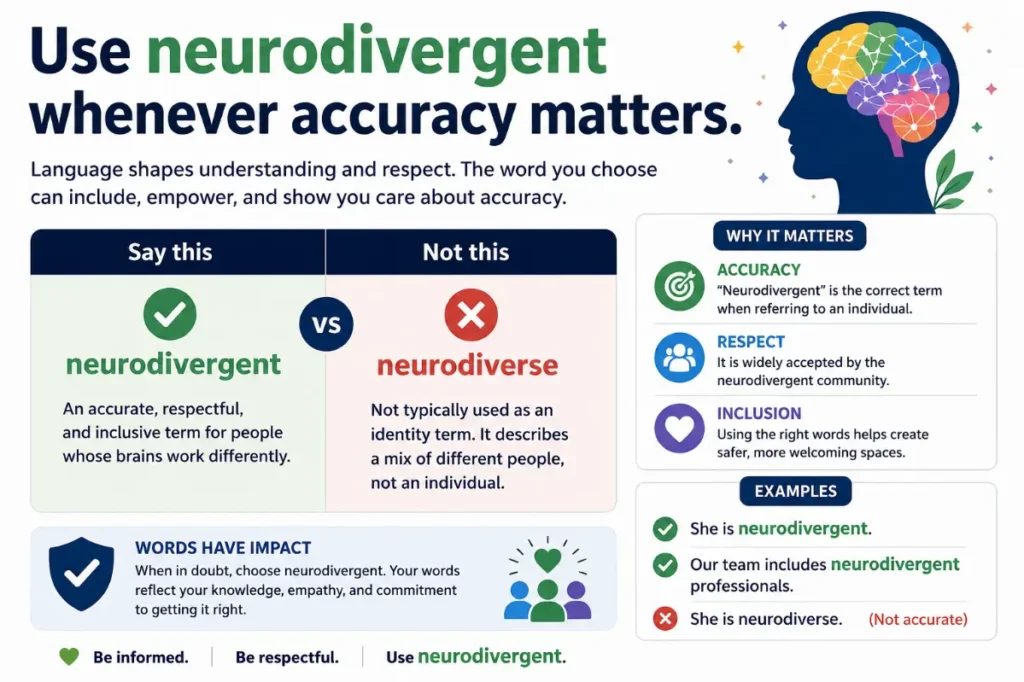
- Neurodiverse refers to a group of people with different brain types, not usually one individual.
- Neurologically different is close in meaning but more formal.
- Learning disabled describes specific learning disabilities, not all neurodivergent people.
- Autistic refers only to autism, not every neurodivergent condition.
That’s why choosing the right alternative matters.
| Word or Phrase | Meaning | Tone | Example |
|---|---|---|---|
| Neurologically different | Brain functions differently | Formal | She is neurologically different and benefits from flexible learning. |
| Neurodistinct | Distinct neurological profile | Modern | The company welcomes neurodistinct applicants. |
| Neurodiverse person | Person with neurological differences | Informal | He is a neurodiverse person who enjoys creative problem solving. |
| Cognitively diverse | Different thinking patterns | Professional | Our team is cognitively diverse. |
| Different thinker | Thinks differently | Everyday | She’s a different thinker with creative ideas. |
| Alternative thinker | Uses unique thinking styles | Everyday | He’s an alternative thinker in design meetings. |
| Unique thinker | Thinks in original ways | Positive | She is a unique thinker. |
Simple Everyday Alternatives
If you’re writing for a general audience, these choices often sound more natural.
| Word | Best Use |
|---|---|
| Thinks differently | Everyday conversations |
| Brain wired differently | Blogs and personal stories |
| Different thinker | Casual writing |
| Unique thinker | Positive descriptions |
| Processes information differently | Educational content |
| Different learning style | Schools and parenting |
| Creative thinker | Workplace conversations |
| Alternative thinker | Informal writing |
These phrases are easier for many readers to understand than technical language.
Formal Alternatives
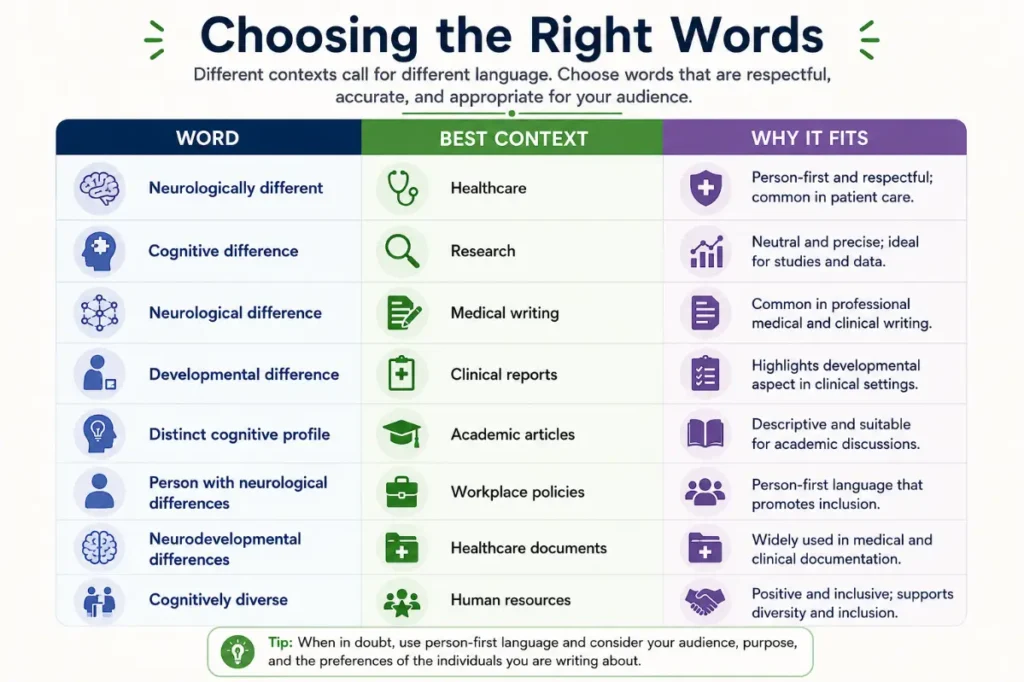
Professional writing often requires more precise wording.
| Word | Best Context |
|---|---|
| Neurologically different | Healthcare |
| Cognitive difference | Research |
| Neurological difference | Medical writing |
| Developmental difference | Clinical reports |
| Distinct cognitive profile | Academic articles |
| Person with neurological differences | Workplace policies |
| Neurodevelopmental differences | Healthcare documents |
| Cognitively diverse | Human resources |
These expressions work well in reports, research papers, workplace documents, and educational resources.
Slang Or Casual Expressions
There aren’t many true slang replacements because neurodivergence is a respectful identity term.
Some people casually describe themselves using phrases like:
- Wired differently.
- My brain works differently.
- My brain runs differently.
- Built differently.
- Different operating system.
- Different brain wiring.
These expressions are usually fine when someone is talking about themselves. They shouldn’t replace respectful language in formal writing.
Synonyms Of Neurodivergent By Intensity
Not every alternative carries the same level of specificity.
| Level | Examples | Best Use |
|---|---|---|
| Mild | Thinks differently, unique thinker, different learner | Everyday conversations |
| Moderate | Different cognitive style, learning difference, brain wired differently | Education and blogs |
| Strong | Neurologically different, cognitive difference, neurological difference | Professional settings |
| Highly Specific | Neurodevelopmental difference, developmental difference | Clinical and research writing |
The stronger and more technical the wording becomes, the more appropriate it is for professional audiences rather than casual conversations.
Synonyms By Part Of Speech
Since neurodivergent is mainly an adjective, most alternatives are adjectives or adjective phrases.
Adjectives
| Word | Example |
|---|---|
| Neurologically different | She is neurologically different. |
| Cognitive | He has cognitive differences. |
| Neurodistinct | She is neurodistinct. |
| Different | He’s different in how he learns. |
| Unique | She has a unique thinking style. |
Adjective Phrases
- Brain wired differently.
- Processes information differently.
- Has a different learning profile.
- Has a unique cognitive style.
- Thinks differently.
- Has neurological differences.
Noun Phrases
- Different thinker.
- Creative thinker.
- Individual with neurological differences.
- Person with a different cognitive profile.
- Neurodiverse person.
- Alternative thinker.
Using person first language is often appreciated in healthcare, education, and professional settings because it keeps the focus on the individual rather than the condition.
Are The Words Neurodivergent And Neurodiverse The Same
Many people use these terms interchangeably, but they aren’t identical.
| Neurodivergent | Neurodiverse |
|---|---|
| Usually describes one individual. | Usually describes a group of people. |
| Refers to someone whose brain works differently. | Refers to a mix of different neurological types. |
| Common in personal identity. | Common in workplaces and communities. |
| Example: She is neurodivergent. | Example: Our classroom is neurodiverse. |
Although many people casually say a neurodiverse person, language experts generally recommend neurodivergent person for an individual.
US Vs UK And Regional Usage
The word neurodivergent is widely recognized in both the United States and the United Kingdom, but some wording preferences vary.
| Region | Common Preference |
|---|---|
| United States | Neurodivergent, learning differences, neurological differences |
| United Kingdom | Neurodivergent, neurodiversity, learning differences |
| Australia | Neurodivergent, neurodiverse community |
| Canada | Neurodivergent, neurologically different |
In most English speaking countries, the respectful language movement has encouraged people to avoid outdated labels that define individuals by perceived limitations.
Healthcare professionals, educators, and advocacy organizations increasingly prefer person centered and respectful terminology that recognizes neurological diversity rather than treating it as something negative.
What Is The Best Word To Use In Different Situations
Finding synonyms of neurodivergent isn’t only about replacing one word with another. The best choice depends on who you’re speaking to and why you’re using it.
A research paper, text message, job application, and classroom discussion all call for different wording. Choosing the right expression makes your writing clearer and more respectful.
Best Word For A Resume
A resume should focus on your skills, qualifications, and achievements. If you mention neurodivergence as part of a diversity statement or accommodation request, use professional and respectful language.
Good choices include:
- Neurologically different.
- Individual with neurological differences.
- Person with a different cognitive profile.
- Neurodivergent.
Example sentences:
- I bring a unique problem solving approach as a neurodivergent professional.
- My different cognitive profile helps me recognize patterns quickly.
- I value inclusive workplaces that support neurological differences.
Avoid overly casual phrases like wired differently because they may sound unprofessional.
Best Word For An Essay
School essays and college papers should use accurate language instead of trendy expressions.
Recommended words:
- Neurodivergent.
- Neurologically different.
- Neurodevelopmental differences.
- Cognitive differences.
- Learning differences.
Example sentences:
- Many schools now provide support for neurodivergent students.
- Researchers continue studying neurological differences in learning.
- Inclusive classrooms benefit students with different cognitive styles.
Best Word For Text Messages
Texting usually calls for relaxed language.
Natural options include:
- Thinks differently.
- Brain wired differently.
- Wired differently.
- Different thinker.
Example sentences:
- My brain’s wired differently, so I remember things in unusual ways.
- She’s always been a different thinker.
- I process information differently, so I like written instructions.
Best Word For Emails
Emails should stay respectful without sounding too formal.
Good choices include:
- Neurodivergent.
- Processes information differently.
- Different learning style.
- Neurological differences.
Example sentences:
- I’m neurodivergent, so written instructions help me stay organized.
- I process information differently and appreciate advance notice.
- Thank you for supporting employees with different learning styles.
Best Word For Speaking
When talking face to face, simple language usually works best.
Common choices include:
- Thinks differently.
- Brain works differently.
- Neurodivergent.
- Different learning style.
These expressions are easy to understand without sounding clinical.
Real Life Example Sentences
Reading examples helps you understand how different expressions fit naturally into everyday conversations.
Workplace
- Our company encourages neurodivergent employees to request accommodations when needed.
- She’s a creative thinker who notices details others often miss.
- His different cognitive style brings fresh ideas to every project.
School
- Teachers should recognize different learning profiles instead of expecting every student to learn the same way.
- The classroom supports students with learning differences.
- Every child processes information differently.
Healthcare
- The specialist explained that neurological differences are common across many conditions.
- Early support can help people with neurodevelopmental differences succeed.
Everyday Conversation
- My brother’s brain is wired differently, and that’s one reason he’s so creative.
- Everyone solves problems differently.
- She thinks differently, and our team benefits from that.
- Being neurodivergent doesn’t limit someone’s potential.
Social Media
- Respecting different thinking styles creates stronger communities.
- Every brain deserves understanding.
- Diversity includes neurological diversity too.
Synonyms Of Neurodivergent Compared Side By Side
Some alternatives seem similar but have important differences.
Understanding these distinctions helps you avoid using the wrong word.
Neurodivergent Vs Neurodiverse
| Neurodivergent | Neurodiverse |
|---|---|
| Usually one individual. | Usually a group of people. |
| Personal identity term. | Describes diversity within a community. |
| Most accurate for one person. | Better for teams, schools, or workplaces. |
Example:
- She is neurodivergent.
- Our office is neurodiverse.
Neurodivergent Vs Learning Difference
| Neurodivergent | Learning Difference |
|---|---|
| Covers many neurological differences. | Mainly focuses on learning challenges. |
| Broader meaning. | Narrower meaning. |
| Includes ADHD, autism, dyslexia, Tourette syndrome, and more. | Often refers to dyslexia and similar learning conditions. |
Example:
- Autism is part of neurodivergence.
- Dyslexia is commonly described as a learning difference.
Neurodivergent Vs Cognitive Difference
| Neurodivergent | Cognitive Difference |
|---|---|
| Identity focused. | Function focused. |
| Common in everyday language. | Common in research and healthcare. |
Example:
- She identifies as neurodivergent.
- The report discusses cognitive differences.
Neurodivergent Vs Wired Differently
| Neurodivergent | Wired Differently |
|---|---|
| Professional and respectful. | Informal expression. |
| Suitable in writing. | Better in conversation. |
| Specific meaning. | General description. |
Example:
- The article discusses neurodivergent students.
- My brain’s wired differently.
Which Words Are Not True Synonyms
People often replace neurodivergent with words that actually mean something else.
These substitutions can create confusion.
| Word | Why It Isn’t A True Synonym |
|---|---|
| Disabled | Not every neurodivergent person identifies as disabled. |
| Gifted | Many gifted people aren’t neurodivergent. |
| Autistic | Autism is only one type of neurodivergence. |
| ADHD | ADHD represents one condition, not the whole group. |
| Dyslexic | Refers only to dyslexia. |
| Mentally ill | Mental illness and neurodivergence are different concepts. |
| Eccentric | Describes unusual behavior, not neurological differences. |
| Genius | Intelligence isn’t the same as neurodivergence. |
Using these words as direct replacements can unintentionally spread misinformation.
Common Mistakes When Using Synonyms Of Neurodivergent
Even experienced writers sometimes choose the wrong alternative. Here are some of the most common mistakes.
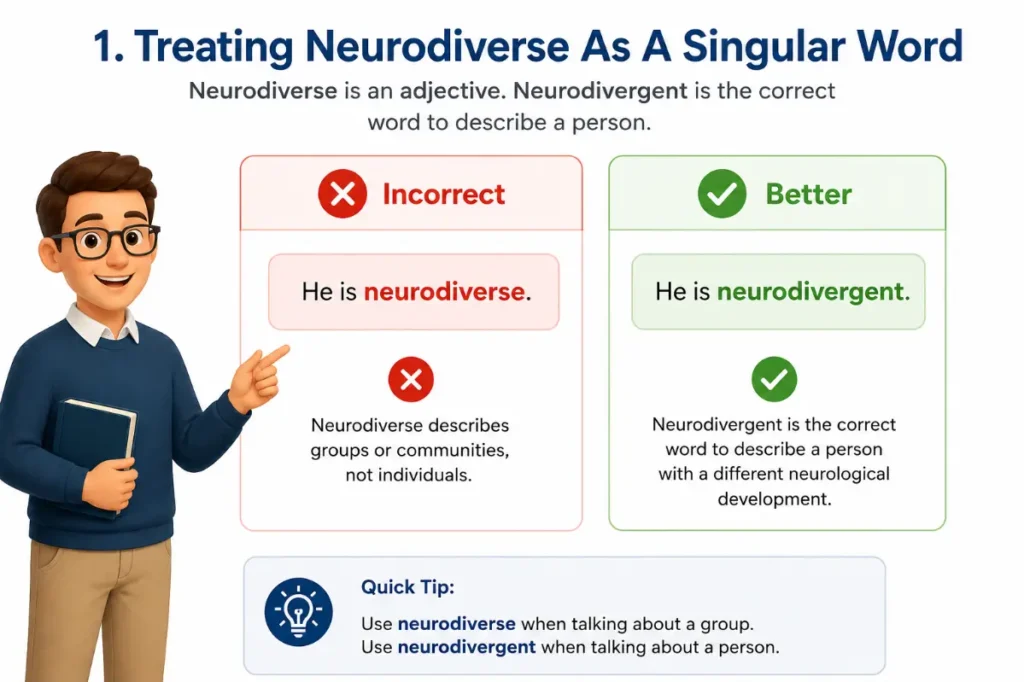
1. Treating Neurodiverse As A Singular Word
Incorrect:
- He is neurodiverse.
Better:
- He is neurodivergent.
2. Assuming Every Condition Means The Same Thing
Autism, ADHD, dyslexia, dyspraxia, and Tourette syndrome all fall under the broader neurodivergent umbrella, but they aren’t interchangeable.
3. Using Outdated Labels
Older terms may appear in historical documents, but many are now considered insensitive or inaccurate. Modern writing should favor respectful language.
4. Using Casual Expressions In Professional Writing
“Wired differently” sounds friendly in conversation but isn’t the best choice for research papers or workplace policies.
5. Forgetting The Audience
Parents, teachers, researchers, healthcare providers, and employers all expect different levels of formality. Always match the wording to your readers.
6. Replacing Every Instance Of Neurodivergent
Sometimes the original word is still the best choice. Not every sentence needs a synonym.
Antonyms Of Neurodivergent
Although there aren’t many direct opposites, these terms express the contrasting idea.
| Antonym | Meaning |
|---|---|
| Neurotypical | Brain functions in ways considered typical. |
| Neurologically typical | Formal version of neurotypical. |
| Typical learner | Learns in expected ways. |
| Conventional thinker | Thinks in commonly accepted patterns. |
| Typical cognitive profile | Standard cognitive development. |
The most widely accepted opposite is neurotypical.
Quick Tips For Choosing The Right Word
Choosing among synonyms of neurodivergent becomes much easier when you think about your audience first.
Keep these tips in mind.
- Use neurodivergent whenever accuracy matters.
- Choose neurologically different for healthcare or academic writing.
- Use thinks differently for casual conversations.
- Pick different learning profile in educational settings.
- Select cognitive difference for research or psychology topics.
- Use brain wired differently only in informal writing.
- Remember that neurodiverse usually describes groups instead of individuals.
- Avoid outdated labels that people may find disrespectful.
- Prefer person first language when required by your workplace or organization.
- If you’re unsure, keeping neurodivergent is usually the clearest and most respectful choice.
By understanding the small differences between these words, you’ll communicate more clearly, avoid common mistakes, and choose language that respects the people you’re writing about.
Conclusion
Finding the right synonyms of neurodivergent is about more than replacing one word with another. It’s about choosing language that is accurate, respectful, and appropriate for your audience. While several related words and phrases exist, very few are true substitutes because neurodivergent has a specific meaning that covers a wide range of neurological differences. In many situations, keeping the original term is the best choice.
When you do need an alternative, think about the setting, the level of formality, and the people you’re addressing. A thoughtful word choice makes your writing clearer, more inclusive, and easier to understand. As language continues to evolve, using respectful and precise terms helps create better communication for everyone.
Frequently Asked Questions
What’s another way to say neurodivergent?
The closest alternatives include neurologically different, different cognitive profile, brain wired differently, and processes information differently. The best choice depends on your audience and the situation.
Are there true synonyms of neurodivergent?
Not completely. While many people search for synonyms of neurodivergent, most alternatives only express part of the meaning or fit specific contexts. The original word is often the most accurate option.
Is neurodiverse the same as neurodivergent?
No. Neurodivergent usually describes one person whose brain works differently, while neurodiverse usually describes a group that includes people with different neurological profiles.
Is “wired differently” respectful?
Yes, in casual conversations, especially when someone uses it to describe themselves. However, it is too informal for academic papers, workplace policies, or medical writing.
Can I use autistic instead of neurodivergent?
No. Autism is one type of neurodivergence, but neurodivergent also includes ADHD, dyslexia, dyspraxia, Tourette syndrome, and several other neurological differences.
Which synonym works best in professional writing?
Professional documents usually sound best with terms like neurologically different, neurological differences, cognitive differences, or simply neurodivergent, depending on the context.
Should I always replace the word neurodivergent?
No. Sometimes the original word is the clearest and most respectful choice. Even when looking for synonyms of neurodivergent, avoid replacing it if another phrase changes the meaning or makes the sentence less accurate.
