
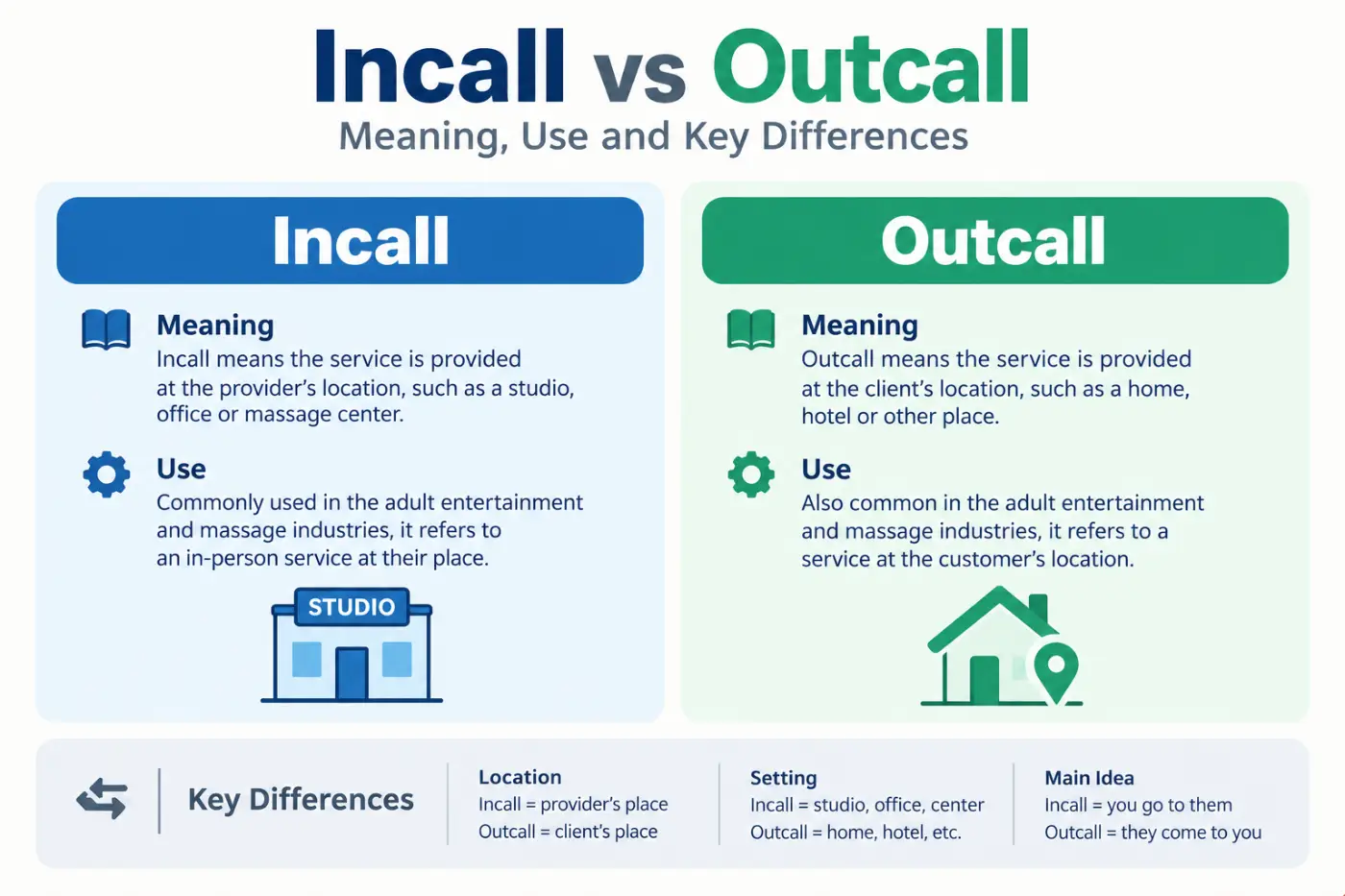
If you’ve ever booked a service and seen the words incall and outcall you may have paused for a second. The terms look similar but they describe two different arrangements. incall vs outcall comes down to one simple question. Does the customer travel to the provider or does the provider travel to the customer.
An incall means the customer goes to the provider’s location. An outcall means the provider travels to the customer’s chosen location. That basic distinction stays the same across many service settings although the exact details can change from one business to another.
The confusion usually comes from the fact that both words are built around the same idea of a service visit. The small words in and out change the direction of that visit. Once you understand that direction the terms become much easier to remember.
This guide explains the difference in plain English. You’ll learn how each term works, where you’ll see it, how to use it naturally, how to pronounce it, and what to consider when choosing between the two options. You’ll also see practical examples that make the distinction easy to remember.
Quick Definition
Incall means the customer travels to the provider’s location for the service. Outcall means the provider travels to the customer’s location. The simplest memory trick is this. Incall means you go in to the provider. Outcall means the provider goes out to you.
Quick Answer
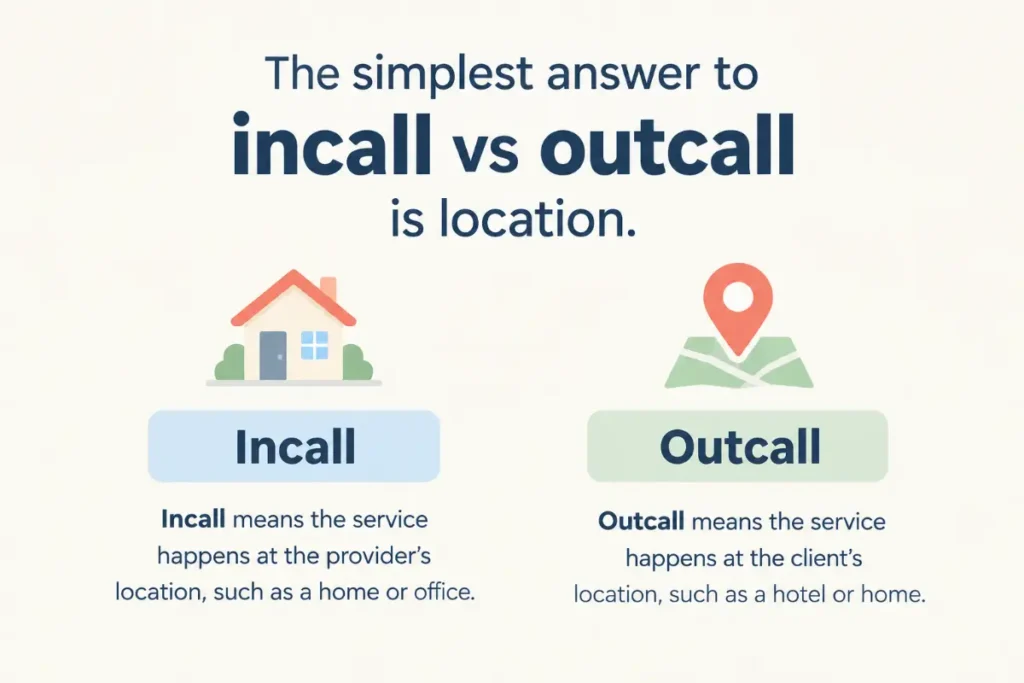
The simplest answer to incall vs outcall is location.
An incall service takes place at the provider’s location. An outcall service takes place at the customer’s location or another location selected by the customer and accepted by the provider.
For example, if you visit a professional’s studio for an appointment that is an incall. If the professional travels to your home or hotel to provide the same type of service that is an outcall.
Neither term automatically describes the quality of a service. The words mainly tell you where the appointment happens and who has to travel.
Comparison Table for Incall and Outcall
| Correct Form | Meaning | Part of Speech | Origin | Usage Frequency | Formality | Common Contexts | Example |
|---|---|---|---|---|---|---|---|
| Incall | A service where the customer visits the provider | Noun and attributive modifier | In plus call | Common in service listings | Informal to neutral | Massage services, mobile professionals, appointments, specialized services | The provider offers incall appointments at the studio. |
| Outcall | A service where the provider visits the customer | Noun and attributive modifier | Out plus call | Common in service listings | Informal to neutral | Mobile services, home visits, veterinary care, professional appointments | The veterinarian offers outcall visits in the local area. |
Meaning and Definition
Meaning of Incall
Incall describes an arrangement where the customer goes to the person or business providing the service.
Imagine a photographer who has a studio. You drive to the studio and have your appointment there. From the customer’s point of view the service is an incall.
The same basic idea can apply to many other services. A professional might operate from a studio, office, clinic, salon, workshop, or another established location. If the customer travels there instead of asking the professional to travel to them, the arrangement can be described as an incall.
The word is especially common in service listings where a provider needs to communicate location options quickly. Instead of writing a long explanation about who travels where, the provider can use one short term.
The spelling may appear as one word or occasionally as in call in some contexts. In modern service listings, incall is widely recognizable as the compact form.
It is also worth remembering that context matters. The term appears in several industries and does not carry one universal meaning outside those contexts. A reader should look at the surrounding service information before making assumptions.
Meaning of Outcall
Outcall describes the opposite arrangement. The provider travels to the customer instead of requiring the customer to visit the provider’s regular location.
For example, a veterinarian may visit a pet owner’s home. A massage professional may travel to a client’s hotel. A photographer may travel to a family’s home for a session. A technician may travel to a customer’s property to perform a service.
The core idea remains the same. The service moves away from the provider’s normal location.
Dictionary treatment supports this basic distinction. Dictionary.com defines outcall as a visit to a client by a professional and gives examples from different service settings. Its entry for incall describes a visit by the client to the provider.
That distinction makes the two words easy to separate once you focus on direction rather than appearance.
Key Differences Explained
- Location
The biggest difference is location. With an incall the customer travels to the provider. With an outcall the provider travels to the customer.
- Travel responsibility
An incall normally puts the customer’s travel on the customer. An outcall normally requires the provider to travel.
- Convenience
An outcall can be more convenient for customers who prefer to stay at home or in another private location. An incall can be more convenient for providers who already have a suitable professional space.
- Pricing
An outcall may cost more because the provider has to account for travel time, transportation, distance, parking, or other expenses. An incall may have a different price structure because the provider stays at one location.
- Equipment
An incall location may already contain equipment needed for the service. An outcall provider may need to carry portable equipment or work with whatever the customer’s location provides.
- Privacy and setting
The setting can feel different. An incall takes place in the provider’s established environment. An outcall takes place in the customer’s chosen environment or another agreed location.
- Scheduling
An outcall can require additional planning because travel time affects the provider’s schedule. An incall may allow the provider to serve multiple customers at one location more efficiently.
- Context
Neither term has exactly the same meaning in every industry. Always read the provider’s description for details about location, travel fees, scheduling, and service conditions.
Which Term Is Correct
Both incall and outcall are established terms. The correct choice depends on the direction of the visit.
Use incall when the customer travels to the provider. Use outcall when the provider travels to the customer.
This is not a case where one spelling is correct and the other is a misspelling. They are separate terms with opposite meanings.
The linguistic structure is straightforward. The word call is combined with the directional words in and out. The resulting compounds describe the direction associated with the visit.
Dictionary references also recognize both forms. The dictionary treatment of incall identifies the customer as the person visiting the provider. The treatment of outcall reverses that relationship.
For professional writing, though, context is still important. If your audience may not know these terms, a plain explanation can be clearer than relying on industry shorthand.
For example, a service page could say, “Incall appointments take place at our studio. Outcall appointments are available at your location.”
That sentence removes almost all room for misunderstanding.
Sentence Examples
Here are natural examples using incall.
- The photographer offers incall sessions at her downtown studio.
- Customers can choose an incall appointment at the clinic.
- The technician charges less for an incall because no travel is required.
- Please select incall if you plan to visit the provider’s office.
- The business offers both incall and outcall appointments.
Here are natural examples using outcall.
- The veterinarian provides outcall visits for pets that cannot easily travel.
- The technician offers outcall service within a twenty mile service area.
- We booked an outcall appointment at our home.
- The photographer charges an additional travel fee for outcall sessions.
- Ask about availability before requesting an outcall appointment.
These examples show why context matters. The terms themselves do not tell you every detail about a service. They mainly tell you who travels.
Common Mistakes and Misspellings
People sometimes misunderstand these terms because they look like ordinary combinations of familiar words. That can lead to several common mistakes.
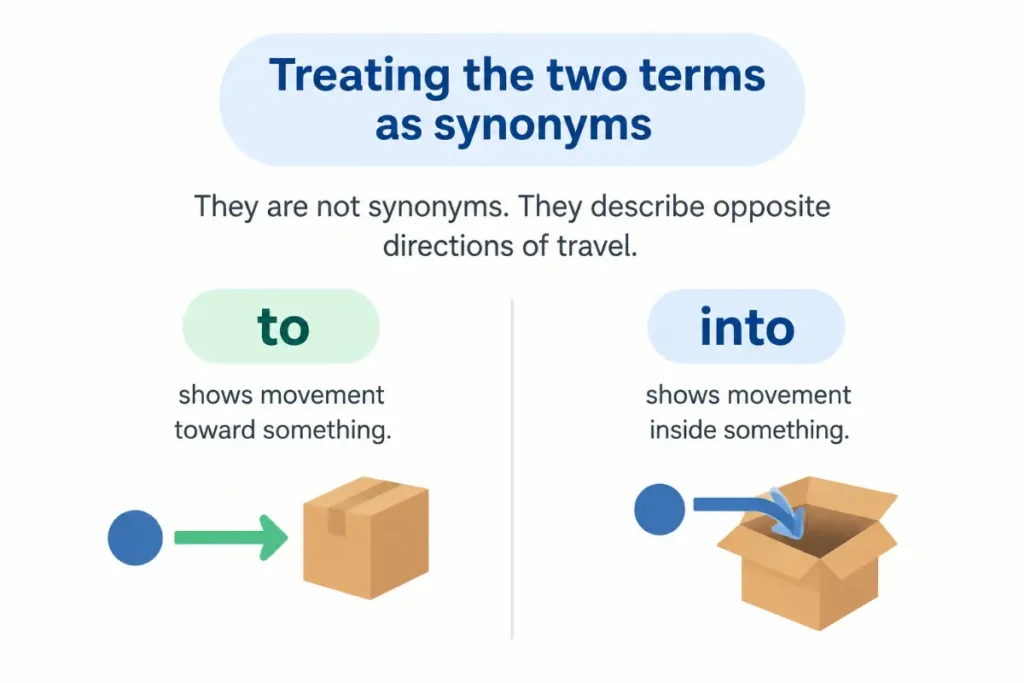
- Treating the two terms as synonyms
They are not synonyms. They describe opposite directions of travel.
- Assuming incall means a phone call
The word can look like a shortened form of call in. In service terminology, however, incall commonly describes a customer visiting a provider.
- Assuming outcall means calling someone
Outcall can look like the ordinary phrase call out. In service terminology, it usually describes a provider traveling to a customer.
- Ignoring the service location
A listing that simply says incall or outcall may not provide enough information for every customer. Readers should check the actual location details.
- Confusing compound terms with ordinary phrases
This is an NLP issue involving segmentation. When people see a compact compound word they may mentally split it into familiar pieces. A reader can therefore interpret incall as in call or outcall as call out even though the service meaning is different.
Another source of confusion is directional framing. English often uses in and out to describe movement. Your brain naturally tries to identify the person who is moving. In these terms the reference point is usually the provider’s location.
That small shift in perspective solves much of the confusion.
Pronunciation Guide
Incall is commonly pronounced like in call.
Its IPA pronunciation is approximately /ˈɪnˌkɔːl/ in dictionary style.
The word has two clear parts.
in call
The first part sounds like the word in. The second part sounds like call.
Outcall is commonly pronounced like out call.
Its IPA pronunciation is approximately /ˈaʊtˌkɔːl/.
The first part sounds like out. The second part sounds like call.
The easiest pronunciation trick is to say the two pieces naturally without adding an extra syllable.
For incall, think in call.
For outcall, think out call.
Some speakers may use slightly different vowel sounds for call depending on their regional accent. That does not change the meaning.
The main pronunciation mistake is usually not the sound itself. It is the meaning attached to the sound. A person may pronounce outcall correctly but misunderstand who travels.
Etymology and Word Origin
The structure of these words is relatively transparent. Incall combines in with call. Outcall combines out with call. The directional element tells the reader how the visit relates to the provider’s location. Dictionary.com dates the recorded use of incall to the 1990s and identifies its formation as in plus call. It dates outcall to the 1960s and gives the formation as out plus call.
This difference in recorded history is interesting because outcall appeared in documented use earlier than incall. That does not mean one term is more correct. It simply reflects the history of how these service expressions entered recorded English.
The word call itself has a much older history. English has long used call for acts involving summoning, visiting, or making contact. Over time, English developed many compounds and phrases around it.
The modern service meanings of incall and outcall are therefore easier to understand as specialized compounds built from familiar English parts rather than as mysterious vocabulary. That is also why the words feel intuitive once you know the reference point.
Regional Usage in the US
In the United States, both terms appear in service listings and professional descriptions. Outcall is also used in fields where professionals travel to clients, including certain medical, veterinary, technical, and personal services.
Incall is more specialized and tends to appear in industries where customers visit a provider at a particular location. The exact frequency varies by industry. American users generally understand the basic directional distinction when the surrounding context makes the service clear.
Regional Usage in the UK
British English can use outcall in service contexts, although other expressions such as home visit or mobile service may sound more natural depending on the industry.
Incall can also appear in specialized service listings. It is not necessary to assume that every British reader will use the term regularly. For a broad British audience, plain wording can often improve clarity. Saying that the customer visits the provider or that the provider travels to the customer removes any possible ambiguity.
Regional Usage in Australia
Australian English can use both terms in specialized service settings. Outcall is particularly easy to understand when a professional provides a service at a customer’s location.
As in other varieties of English, local industry habits influence which term appears most often. A business writing for a general audience should not rely entirely on specialized vocabulary. A short explanation can make the service arrangement instantly clear.
Regional Usage in Canada
Canadian English can also use incall and outcall in service contexts. The meanings generally follow the same basic distinction found in American English. Outcall commonly emphasizes that a professional travels to the customer. Incall indicates that the customer attends the provider’s location.
Industry terminology can vary, so Canadian businesses may also prefer expressions such as mobile service, home visit, or appointment at our location.
Grammar Rules and Part of Speech
Both terms commonly function as nouns.You can say that a provider offers an incall or that a customer booked an outcall. They can also work as attributive modifiers before another noun.
For example, you might write:
The provider offers incall appointments.
The company charges extra for outcall visits.
In these examples, incall and outcall help identify the type of appointment.
The terms can also appear after verbs such as offer, provide, book, request, schedule, and choose.
For example:
We offer both options.
She requested an outcall.
They booked an incall.
When writing for a general audience, clarity matters more than compact terminology. If your readers may not know the vocabulary, explain the meaning once.
Punctuation can vary depending on style and source. You may encounter incall and outcall as closed compounds. You may also see forms such as in call or out call in less standardized writing. For professional copy, consistency matters. Pick one form that fits your audience and use it consistently.
Real Life Usage Examples
Daily Talk
- I called the provider and asked if they offer an outcall.
- We chose an incall because the studio was closer.
These examples sound natural in casual conversation when both speakers already understand the service context.
- Please let me know if you offer outcall appointments at the customer’s location.
- I’d like to schedule an incall appointment at your office.
In email, adding the location makes the request especially clear.
Academic Writing
- The study distinguishes between services delivered at a provider’s location and services delivered at a customer’s location.
- The researchers treated provider travel as a separate factor in their analysis.
Academic writing usually favors explicit wording instead of specialized service shorthand. That approach reduces ambiguity.
News
- The veterinary practice has expanded its outcall service for aged pets.
- The company announced new appointment options at its central clinic.
News writing often explains specialized terms rather than assuming readers already know them.
Literature
- The character waited at home for the visiting professional to arrive.
- The appointment took place at the provider’s small studio across town.
Creative writing usually has little reason to use industry shorthand unless the terminology contributes to the setting or character voice.
Expert Editor Insight
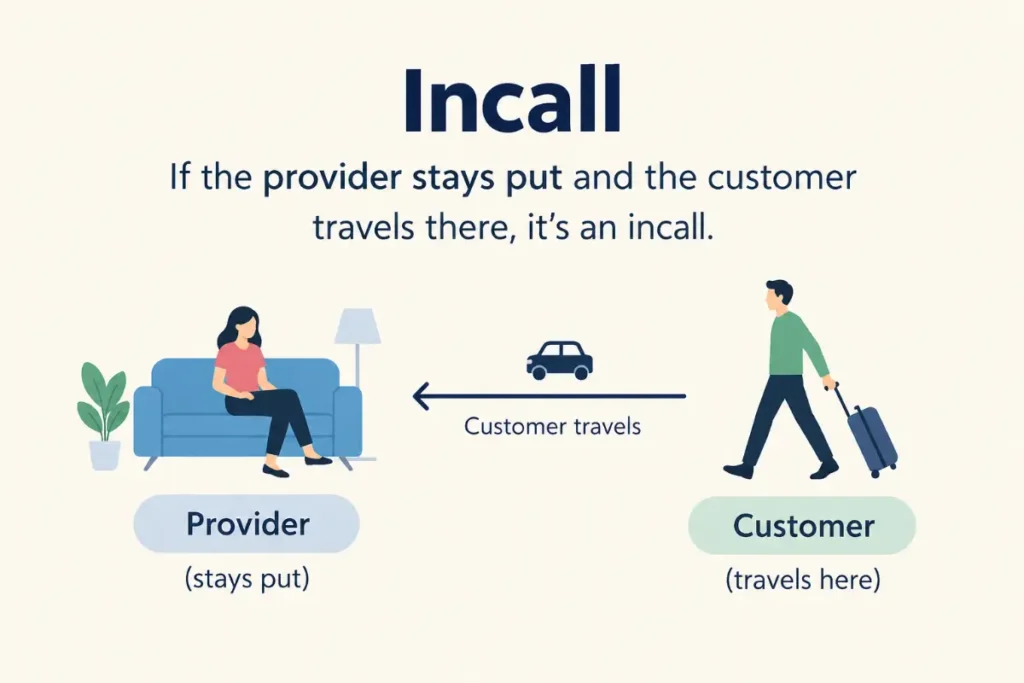
As a senior editor, I’d make one rule the center of the explanation. Identify the reference point first. If the provider stays put and the customer travels there, use incall. If the provider travels away from the usual service location to meet the customer, use outcall. Native speakers often understand these terms from context rather than stopping to analyze their grammar. However, specialized vocabulary can create confusion for a general audience. If clarity matters more than brevity, write the full explanation once and then use the shorter term afterward.
Conclusion
incall vs outcall has a simple difference once you identify who travels. Incall means the customer visits the provider’s location. Outcall means the provider travels to the customer’s location. Both terms are established in specialized service language, and neither one is simply a misspelling of the other.
The main challenge comes from the fact that the words look almost identical. The small difference between in and out completely changes the direction of the service. That is why context matters when you see either term on a booking page or service listing.
For a quick memory trick, think about the provider’s location. If you go there, it is an incall. If the provider comes to you, it is an outcall. When writing for a general audience, explain the location plainly the first time you use either term.
Frequently Asked Questions
Is Incall a Real Word?
Yes. Incall is an established term used in certain service contexts. It describes an arrangement where the customer visits the provider’s location. It is recognized in dictionary sources and appears in professional service listings. The term is specialized rather than universal, so general readers may understand it more easily when the listing also explains the location.
What Does Incall Mean?
Incall means that the customer goes to the provider’s location for the service. The provider normally remains at a studio, office, clinic, or another established location. For example, if you travel to a professional’s studio for an appointment, that appointment can be described as an incall. The exact service depends on the business and its industry.
incall vs outcall Which Is Correct?
Both are correct, but they describe different arrangements. Incall means the customer travels to the provider. Outcall means the provider travels to the customer. The choice depends on the location of the service rather than grammar or spelling. Think of in as moving toward the provider’s location and out as the provider moving away from it.
How Do You Pronounce Incall and Outcall?
Incall sounds like in call. Its pronunciation begins with the short vowel sound in in and continues with call. Outcall sounds like out call and begins with the sound in out. Both terms normally have two spoken parts even though they may appear as single written words in service listings.
Can Incall Start a Sentence?
Yes. Incall can appear at the beginning of a sentence when it functions as a noun or modifier. For example, you could write, “Incall appointments are available on weekdays.” However, a general audience may benefit from a short explanation the first time the term appears. Clear context makes specialized vocabulary much easier to understand.
What Is a Synonym for Outcall?
Depending on the industry, useful alternatives can include home visit, mobile service, on site service, or service at your location. These expressions are not always exact synonyms because the details can differ. Outcall specifically focuses on the provider traveling to the customer. Choose the alternative that accurately describes the actual service arrangement.
Why Do People Confuse Incall and Outcall?
People confuse the terms because both contain the familiar word call and differ by only one short directional word. Readers may also interpret them through ordinary phrases such as call in or call out. The easiest solution is to focus on who travels. Customer travels to provider means incall. Provider travels to customer means outcall.
Is Outcall Suitable for Formal Writing?
Outcall is suitable when the audience knows the terminology and the context requires it. In general formal writing, a clearer phrase such as service at the customer’s location may work better. Professional writers should consider their audience first. Specialized terminology saves space for experienced readers but can create unnecessary confusion for people seeing the term for the first time.
